
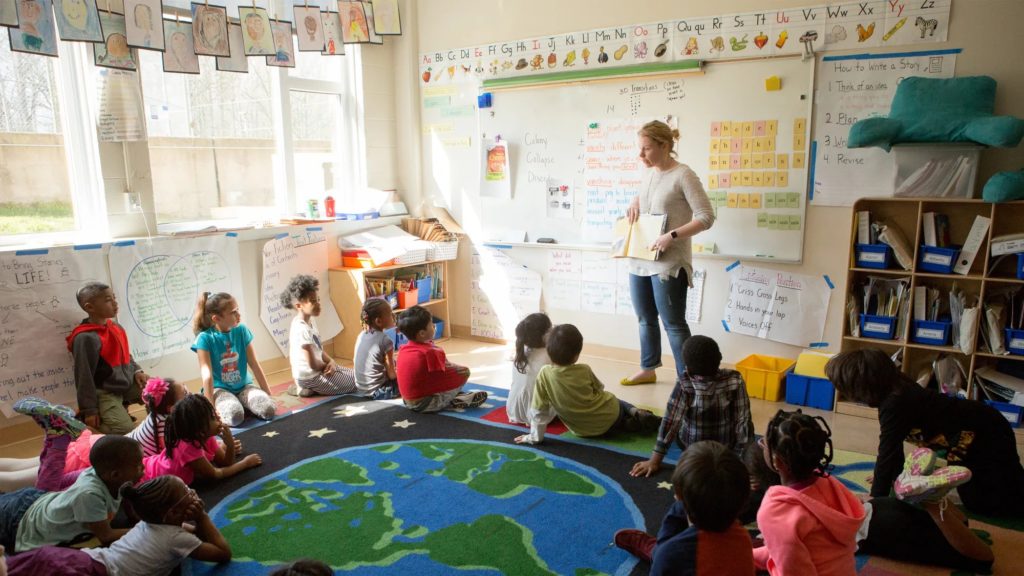
There is a well–known African proverb that says: “It takes a village to raise a child.” This saying reminds us that raising a child is not the sole responsibility of parents—it requires the support of the whole community: neighbors, teachers, relatives, and even the environment in which the child grows. In the same way, shaping a child’s ability to live and work successfully in the modern world—what we now call global competence—is also a shared responsibility.
What is Global Competence?
Global competence means having the knowledge, skills, and attitudes that enable a person to:
Understand and appreciate cultural differences.
Communicate and work effectively with people from diverse backgrounds.
Think critically about global issues and take responsible action.
It is not just about speaking English or knowing world geography—it’s about empathy, cultural respect, and the ability to solve problems in a connected world.
The Thai Education Curriculum and Its Goals
The Thai national education system has long aimed to produce citizens who are knowledgeable, ethical, and able to contribute to society.
The curriculum focuses on:
Academic knowledge (science, mathematics, languages).
Moral and ethical values.
Skills for daily life and work.
However, in the 21st century, we must link these goals to the idea of global competence. Education should not only prepare students to work in Thailand, but also to live and work in the wider global community.
Challenges in Building Global Competence in Thailand
In many rural areas, education is still weaker than in the cities. Parents often work long hours to support their families, which leaves less time for them to discuss social values or global issues with their children. If teachers and the education system do not step in to fill this gap, students may grow up without awareness of important skills such as:
Respecting different cultures and customs (for example, queuing properly).
Caring for the environment (for example, disposing of waste responsibly).
Thinking critically about information (for example, questioning what they see on social media to avoid being misled).
Without these abilities, global competence is difficult to achieve.
How Teachers Can Help
Teachers play a central role in shaping global competence. Training programs should encourage teachers to:
Design lessons that make students think, not just memorize.
Introduce global problems—such as climate change, inequality, or cultural conflict—and ask students to work together to find solutions.
Integrate cultural education into lessons to promote understanding and respect among people. For example, a science class could discuss renewable energy as a global issue, while a language class could include activities about different countries’ traditions.
Making the Curriculum Responsive to Global Needs
We live in one community, not just one country. An education curriculum that does not promote global competence is already outdated, because the driving force for a better society is education that prepares students to be:
Globally aware.
Socially responsible.
Ready to collaborate with others across borders.
This requires the Thai curriculum to be responsive—to adapt to global challenges and opportunities, not only to local needs.
I believe that education plays a vital role in fostering Global Competence among learners, especially in the context of Thai society. In Thailand, I see the development of knowledge and skills as the primary role of our education system. These can be effectively transferred from teachers to students through various teaching and learning approaches, such as active learning. I believe that knowledge serves as a fundamental base upon which learners can act, grow, and further develop their potential. However, when it comes to attitudes, I consider them equally important but also far more delicate and challenging in the Thai educational context. This is because certain attitudes conveyed in education are closely tied to deeply rooted ideologies and values in Thai society, which may sometimes conflict with the principles of Global Competence. For example, in English language teaching, there is a common belief that being proficient means having a perfect, native–like accent. This view contrasts with the Global Competence perspective, which recognizes English as a diverse and fluid language that belongs to all who use it, each with their own voice and identity.
This example shows the need for caution when transmitting attitudes through education. I believe that Critical Pedagogy may be essential in Thai education to foster critical thinking, encourage reflection, and help reconceptualize or deconstruct long–held ideologies and values to better align with a global mindset.
As for values, I also see them as crucial. Learning values such as understanding and respecting differences is a key component of Global Competence, and I believe these can be cultivated in Thai society. In fact, I think Thai people already possess these qualities to some extent. However, it is important to further strengthen values such as collaboration, peaceful coexistence, and the shared responsibility of being active and responsible global citizens.
Conclusion
To raise globally competent citizens, we need the entire “village”—parents, teachers, schools, communities, and policymakers—to work together.
Education is the key driver, and teachers are the bridge between the classroom and the world. If we commit to this, we will not only prepare our children for the future—we will prepare Thailand to thrive in the global community.
By: Assoc. Prof. Pragasit Sitthitikul
