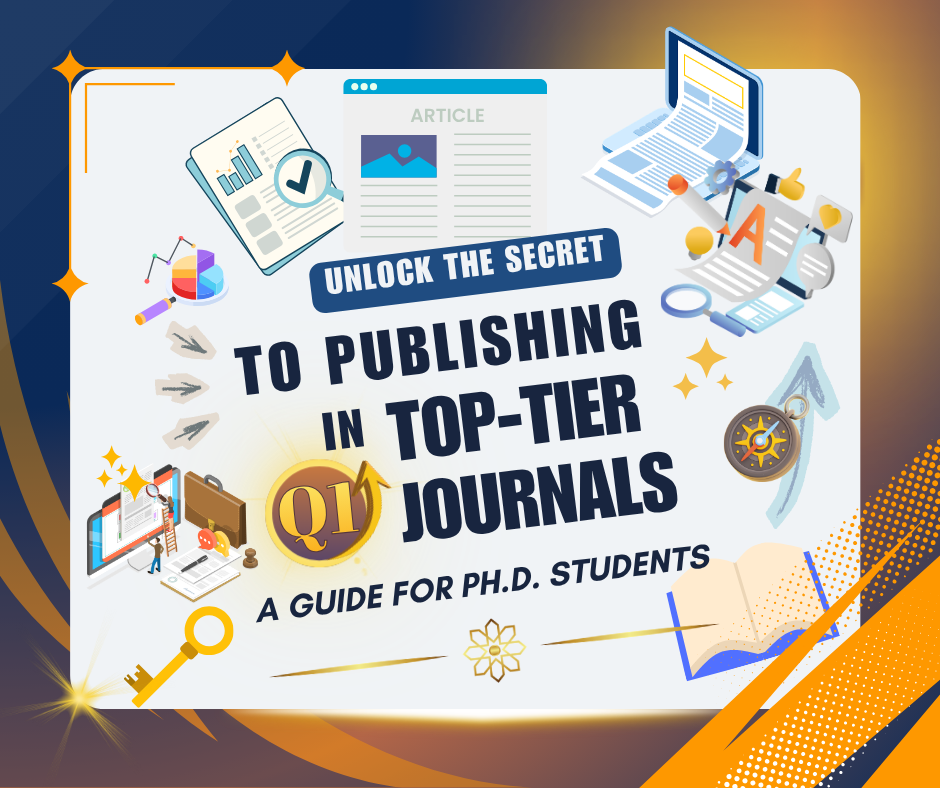
At the College of Graduate Studies, Walailak University, we understand that for a Ph.D. student, publishing is not just a requirement—it is the foundation of your future academic career. In the competitive landscape of “Publish or Perish,” the goal is now to “Publish and Prosper”. To help you reach this goal, we are highlighting a masterclass in editorial strategy by Dr. Justin Paul, Editor-in-Chief of the International Journal of Consumer Studies.
His recent paper, “Publishing in premier journals with high impact factor and Q1 journals: Dos and Don’ts,” provides the ultimate blueprint for navigating the rigorous peer-review process.
Understanding the High Stakes of Q1 Journals
Getting accepted into a Q1 journal (the top 25% of journals in a field) is a “multifaceted challenge”. These premier outlets often have desk rejection rates exceeding 70-80%. According to Dr. Paul, manuscripts are often rejected for reasons that Ph.D. students can avoid with the right preparation:
- Lack of Originality: Your work must present “novel findings” that significantly add to existing knowledge.
- Flawed Research Design: Using a single survey or a small sample size is often seen as a weakness in premier journals.
- Insufficient Impact: Journals prefer papers with “generalized lessons” that a global audience will want to read and cite.
- Language and Flow: Errors in grammar or a lack of coherence can lead to rejection based on poor readability.
Strategic "Dos" for Ph.D. Success
To increase your chances of acceptance, Dr. Paul recommends several “pro-tips”:
- Refine like a Diamond: Do not rush your submission. Read and rewrite your introduction and abstract multiple times until they are perfect.
- Be a First Mover: Choosing to study “contemporary topics” such as AI allows you to be an early researcher in the field. This “First Mover” status helps your paper stand out to editors and ensures it becomes a go-to resource for others to cite.
- Use Robust Methodology: Whenever possible, design Mixed Method studies or Experimental designs, as these are highly valued by top-tier editors.
- Avoid Student Samples: Many premier journals have a policy of rejecting papers based purely on convenient student sampling.
The Secret Ingredient: Expert Mentorship
One of the most candid insights from Dr. Paul is the value of Co-authorship. Including co-authors with “subject expertise” or a strong track record can provide the guidance needed to meet the highest standards.
For a Ph.D. student, this means your relationship with your Advisor is paramount. A great advisor acts as your gatekeeper to the academic world, helping you identify research gaps and ensuring your methodology is bulletproof. They provide the “resources and guidance” that are often the difference between a rejection and a publication.
To learn more about maximizing your relationship with your mentor, don’t miss our previous guide: Selecting the Right Advisor for Graduate Success.
By applying these expert strategies and working closely with your supervisory team, you can unlock the doors to the world’s most prestigious journals. Let’s bring Walailak University’s research to the global stage!
Full Article Reference
Paul, J. (2024). International Journal of Consumer Studies, 48(3), e13049.
