
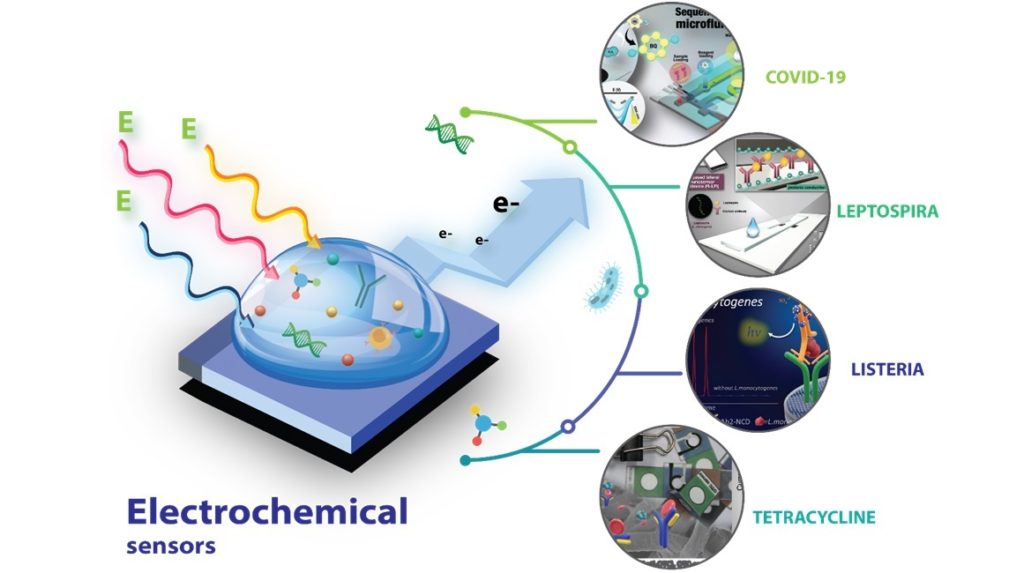
เทคนิคเคมีไฟฟ้า (Electrochemical technique) เป็นสาขาหนึ่งในเคมีวิเคราะห์ (Analytical chemistry) ที่ศึกษาความสัมพันธ์ระหว่างกระแส/ศักย์ไฟฟ้าและปฏิกิริยาทางเคมีที่เกิดขึ้นบริเวณผิวหน้าขั้วไฟฟ้า (Electrode) เมื่อให้ศักย์ไฟฟ้า (Potential, E) กระตุ้นเข้าไปในระบบ ค่าที่เปลี่ยนแปลง (กระแส ศักย์ไฟฟ้า คุณสมบัติการนำไฟฟ้า) จะมีความสัมพันธ์กับปริมาณของสารตัวอย่างในระบบ ดังนั้น เทคนิคทางเคมีไฟฟ้าจึงถูกนำไปใช้งานอย่างแพร่หลายในการวิเคราะห์ทั้งเชิงคุณภาพและปริมาณ ยกตัวอย่างเช่น การตรวจหาเชื้อโรคทางด้านการแพทย์ แบคทีเรียปนเปื้อนในอาหาร ยาปฏิชีวนะในสิ่งแวดล้อมและสินค้าทางการเกษตร การควบคุมคุณภาพยา และอื่นๆ ข้อดีของเทคนิค คือ มีความไวต่อการตรวจวัดสูง รวดเร็ว ราคาถูก ใช้งานง่าย และใช้สารปริมาณน้อยในระดับไมโครลิตร นอกจากนี้ การเพิ่มประสิทธิภาพของการตรวจวัดในแง่ของความไวและความจำเพาะ สามารถทำได้ง่าย ไม่ซับซ้อน โดยการนำวัสดุนาโน (Nanomaterials) ที่มีคุณสมบัติการนำไฟฟ้าที่ดีและตัวจดจำทางชีวภาพที่จำเพาะ (Biorecognition elements) มาดัดแปรสภาพผิวหน้าขั้ว เกือบทศวรรษ เราได้พัฒนารูปแบบการตรวจวัดด้วยเทคนิคทางเคมีไฟฟ้าอย่างต่อเนื่อง เพื่อให้สามารถตอบโจทย์กับการเปลี่ยนแปลงของโลกปัจจุบันให้ได้มากที่สุด แต่อย่างไรก็ตาม ความท้าทายของการตรวจวัดด้วยเทคนิคนี้ คือ การตรวจวัดสารหลายตัวพร้อมกัน (Multiplex analysis) ด้วยความจำเพาะ หรือแม้กระทั่ง การผสมผสานระหว่างวัสดุนาโน รูปแบบการตรวจวัด (Advanced platform) และเทคนิคใหม่ๆ เข้าไปในระบบ เช่น ปัญญาประดิษฐ์ (Artificial intelligence) ซึ่งจะนำไปสู่การต่อยอดองค์ความรู้ในหลายมิติ
Electrochemical technique, a branch of analytical chemistry, measures the current/potential change during a chemical reaction at the electrode interface. This technique is utilized in both qualitative and quantitative analyses as the output signals (e.g. current, potential, conductivity) are specific and proportional to the amount of target analyte. Pathogen detection in medical area, bacteria contaminated in food, antibiotic residual in environment and agricultural products, and drug control are examples of where and how this technique has been commonly used. Electrochemical approach provides several prominent advantages including sensitivity, rapidity, low cost, ease of deployment, and miniscule sample requirement (microliter scale), rendering it as a leading sensing platform. The detection performance of these methods, especially their sensitivity and specificity, can also be simply altered via transducer surface modification using conductive nanomaterials and biorecognition elements. For decades, we have continued to develop electrochemical platforms to fulfil today’s unmet needs. However, major areas of improvement include selective multiplex analysis, or merging novel nanomaterials, advanced platforms, and incorporating artificial intelligence to expand on the functionality, leading to a significant development in multidimensions.
Join us! We are looking forward to collaborating with you to expand on our innovation.
ดร.ศักดิ์ดา จำปาสา. รักษาการแทนหัวหน้าศูนย์วิจัยวิทยาศาสตร์แห่งอนาคต. สำนักวิชาวิทยาศาสตร์
